It’s Not a Rejection of AI — It’s a Rejection of the Narrative of Inevitability
Graduation ceremonies are supposed to be sacred.
They’re supposed to be moments where time slows down, where families cry, where students feel the weight of their own becoming. They’re supposed to be about identity, purpose, and the quiet pride of surviving years of pressure, debt, uncertainty, and self‑doubt.
But this year, something else echoed through the stadiums and arenas where students gathered in their caps and gowns.
It wasn’t just applause. It wasn’t just cheers. It was something sharper, more honest, more raw:
Booing.
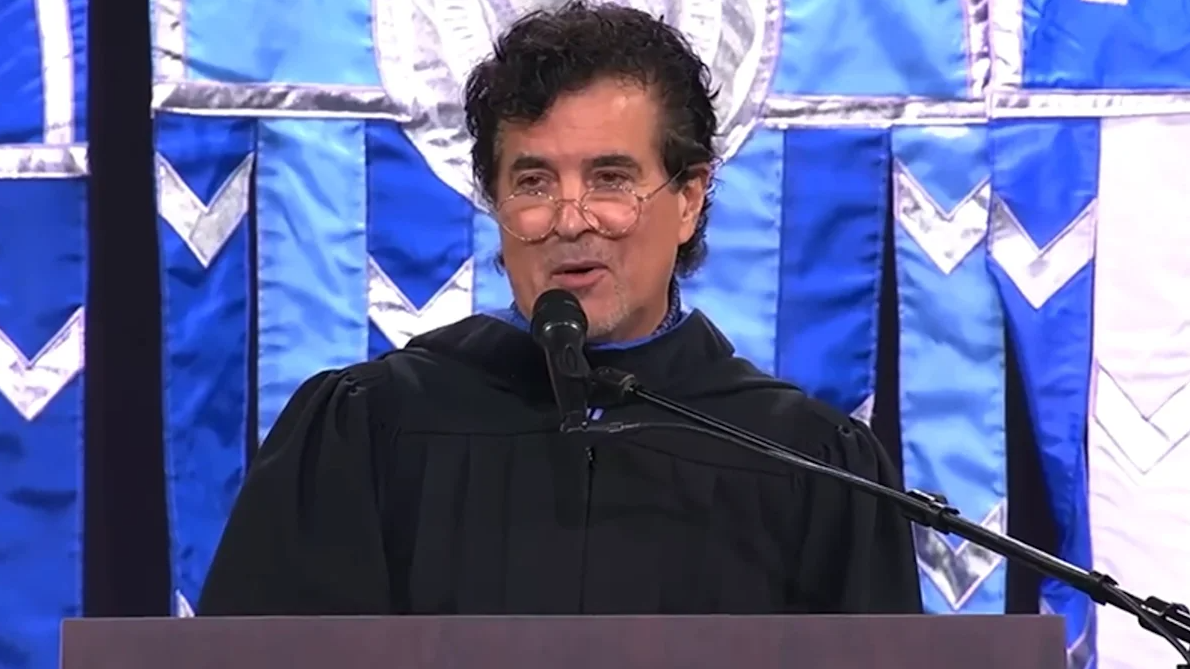
Across multiple universities in the United States, commencement speakers mentioned artificial intelligence — and the crowds booed. Not politely. Not as a joke. Not as a nervous reaction.
They booed with conviction. They booed with frustration. They booed with the kind of emotional clarity that appears when a generation feels misunderstood and spoken over.
And here’s the uncomfortable truth that the corporate world doesn’t want to sit with:
They weren’t booing AI itself. They were booing the narrative around it.
They were booing the inevitability. They were booing the pressure. They were booing the way AI is being used as a symbol of a future they never got to help design.
This article is not about defending AI. It’s about defending the students. It’s about standing beside them — not above them — and acknowledging that their reaction is not ignorance, not immaturity, not resistance to innovation.
It’s a protest. It’s a boundary. It’s a plea for humanity.
I. The Sound of Booing Is Not a Rejection of Technology — It’s a Rejection of Timing
Let’s start with something simple and obvious that somehow keeps getting ignored:
Graduation is not the moment to turn a celebration of human effort into a keynote about technological disruption.
Students have spent years grinding through exams, projects, group work, part‑time jobs, family responsibilities, mental health struggles, and a global pandemic that reshaped their education. They’ve navigated hybrid classes, unstable routines, and a constant background noise of “the world is changing faster than ever.”
And then, on the day that’s supposed to be about them — their story, their resilience, their identity — someone walks up to the podium and says:
“AI is here. It’s going to change everything. You’re going to have to deal with it.”
Of course they booed.
They weren’t rejecting the existence of AI. They were rejecting the framing. They were rejecting the emotional tone. They were rejecting the idea that their big moment had been hijacked by a narrative that wasn’t about them at all.
Graduation is supposed to be about:
- Who they’ve become.
- What they’ve survived.
- What kind of humans they want to be.
- What kind of world they want to help build.
Instead, they were being told what kind of world they must adapt to — whether they like it or not.
That’s not inspiration. That’s a threat disguised as advice.
II. The Real Fear Isn’t AI — It’s Entering a Job Market That Was Already Broken
To understand the booing, you can’t just look at the speeches. You have to look at the context.
The class of 2026 is entering one of the most complex and unforgiving job markets in recent memory. Long before AI became the headline, the system was already cracking:
- “Entry‑level” roles demanding 3–5 years of experience.
- Internships that are unpaid, underpaid, or reserved for those with connections.
- Applicant tracking systems filtering out thousands of qualified candidates before a human ever sees their name.
- Wages that haven’t kept up with tuition, rent, or basic cost of living.
- Companies cutting junior roles first when budgets tighten.
Now add AI to that mix.
AI is being used to automate tasks that used to be assigned to interns and new grads. AI is being used to screen résumés, generate content, summarize meetings, and even write code. The message students are hearing — explicitly or implicitly — is:
“The work you thought you were training for might not need you anymore.”
So when a speaker stands on a stage and says, “AI is going to transform every industry,” what students hear is:
“You are already behind.”
They’re not afraid of AI as a tool. They’re afraid of being irrelevant before they even begin. They’re afraid of being told that their degree, their creativity, their effort — the very things they sacrificed for — are now optional.
And what makes it worse is that almost no one is acknowledging this emotional reality. The narrative is all about adaptation, not about grief. All about opportunity, not about loss.
The booing is not a rejection of technology. It’s the sound of a generation mourning the future they were promised and being handed a different one without being asked.
III. The Corporate Narrative of AI Is Emotionally Hollow
Listen closely to how AI is usually talked about in public spaces — especially by executives, tech leaders, and institutional voices.
The vocabulary is almost always the same:
- Disruption.
- Innovation.
- Efficiency.
- Productivity.
- Automation.
- Inevitability.
These words might excite investors, but they don’t nourish humans. They don’t speak to identity, purpose, or belonging. They don’t answer the questions students are actually carrying:
- Who am I in a world where machines can do so much?
- What is my work worth if a model can generate something similar in seconds?
- How do I build a life that feels meaningful, not just efficient?
- Will I ever feel secure?
The corporate narrative of AI is emotionally hollow because it treats humans as variables in a system, not protagonists in a story. It treats students as future workers, not as whole people. It treats graduation as a platform for technological evangelism, not as a moment of human reflection.
So when students boo, they’re not just reacting to a sentence. They’re reacting to years of being spoken to in a language that optimizes them but doesn’t see them.
IV. Students Are Not Anti‑AI — They Are Anti‑Dehumanization
Here’s what the headlines often get wrong: students are not anti‑technology.
Gen Z is the most technologically fluent generation in history. They grew up with smartphones, social media, streaming platforms, and instant access to information. Many of them use AI tools daily — for studying, brainstorming, coding, writing, and even for emotional processing.
They are not afraid of tools. They are afraid of narratives that erase them.
What they are rejecting is not AI itself, but the way AI is being positioned:
- As something they must compete against, instead of something they can collaborate with.
- As a force that will decide their relevance, instead of a tool they can direct.
- As a destiny, instead of a choice.
- As a measuring stick for their worth, instead of an amplifier of their strengths.
They are rejecting the idea that their humanity is a bug in the system — something messy, inefficient, and inconvenient. They are rejecting the subtle message that the “ideal worker” is one who behaves more like a machine: always on, always optimized, always productive.
The booing is not a tantrum. It’s a refusal to be dehumanized.
V. The Booing Is a Form of Agency — A Way of Reclaiming the Narrative
For years, students have been told they need to stand out, build a personal brand, be competitive, be adaptable, be “future‑proof.” They’ve been coached, mentored, and marketed to with an endless stream of advice on how to survive in a system that feels increasingly unforgiving.
But very few people have asked them a simple question:
“What kind of future do you want?”
The booing is not just noise. It’s a boundary. It’s a generation saying:
“Stop telling us what the future is. Start asking us what future we want to build.”
In a world where so much feels automated, predetermined, and optimized, booing is one of the few raw, unscripted expressions of agency left in a highly choreographed event. It’s a way of saying:
- “This narrative doesn’t represent us.”
- “This framing doesn’t honor our experience.”
- “This moment is supposed to be about us — and you’ve made it about something else.”
We often talk about agency in abstract terms, but sometimes it looks like a stadium full of students refusing to politely accept a story that erases their humanity.
VI. The Real Issue: AI Is Being Presented as Destiny, Not as a Tool
At the core of this tension is a simple but dangerous framing: AI is being presented as destiny.
When leaders say things like “AI will touch every profession” or “AI will transform every industry,” they may be trying to emphasize scale — but what students hear is inevitability. They hear that the future is already written, and their role is to adapt or be left behind.
Humans don’t form identity in the shadow of inevitability. We form identity through choice, agency, and participation. We need to feel like co‑authors of our lives, not just characters in someone else’s script.
When AI is framed as an unstoppable force that will reshape everything, students are left wondering:
- “Where do I fit in?”
- “Do I still matter?”
- “Is there any part of my future that isn’t negotiable?”
That’s why they boo. Not because they don’t understand AI, but because they understand all too well what it means to be told that the most important forces shaping their lives are outside their control.
VII. What Students Actually Want to Hear About AI
If commencement speakers truly understood the emotional landscape of this generation, their message about AI would sound very different.
They might say:
“You are not here to compete with AI. You are here to decide how it’s used.”
“AI is powerful, but it is not destiny. It is a tool — and tools need direction, values, and boundaries. That’s where you come in.”
“Your creativity, your empathy, your lived experience — these are not optional. They are the very things that make technology meaningful.”
They would talk about AI not as the protagonist of the story, but as an instrument in the hands of humans who care about justice, dignity, and purpose. They would acknowledge the fear, the uncertainty, and the grief — not just the opportunity.
They would say:
“You are allowed to feel overwhelmed. You are allowed to feel skeptical. You are allowed to question the way AI is being deployed. That doesn’t make you anti‑technology. It makes you human.”
VIII. The Emotional Truth: Students Want to Be Seen, Not Optimized
This generation is tired — not just physically, but existentially.
They are tired of being measured, compared, ranked, filtered, and optimized. They are tired of being told to hustle harder, adapt faster, and constantly upgrade themselves to stay relevant in a system that rarely feels reciprocal.
They don’t want to be treated like inputs in a productivity equation. They want to be seen as humans with:
- Dreams that don’t always fit into job descriptions.
- Fears that can’t be solved with a productivity hack.
- Identities that are still forming and deserve space to breathe.
- Values that sometimes conflict with what the market rewards.
AI is not the enemy here. The enemy is any narrative — technological or otherwise — that reduces them to their economic output.
When students boo AI mentions at graduation, they’re not saying, “We don’t want tools.” They’re saying, “We don’t want our humanity to be an afterthought.”
IX. The Future of Work Needs a New Story — One That Starts With Humanity
If we want students to engage with AI in a healthy, empowered way, we don’t just need better tools. We need a better story.
Not a story about inevitability. Not a story about disruption. Not a story about who will be “left behind.”
We need a story that starts with humanity and works outward. A story that asks:
- What kind of lives do we want to live?
- What kind of work feels meaningful, not just profitable?
- How can technology support human dignity instead of eroding it?
- How do we design systems where people are not disposable?
In that story, AI is not the main character. The student is. The worker is. The human is.
AI becomes a tool for:
- Reducing unnecessary friction, not human connection.
- Expanding access, not deepening inequality.
- Supporting creativity, not replacing it.
- Amplifying voices, not silencing them.
That’s the story this generation is hungry for — and they can tell when they’re not hearing it.
X. A Message to the Class of 2026
To every student who booed when AI was mentioned at your graduation:
You were right.
You were right to reject a narrative that treated your big day like a tech conference. You were right to push back against a framing that made your future sound like a problem to be solved instead of a life to be lived.
Your reaction was not disrespect. It was discernment.
You are not entering a world where AI replaces you. You are entering a world where your humanity matters more than ever — precisely because so much can now be automated.
Your creativity is not optional. Your empathy is not optional. Your perspective, your story, your lived experience — none of that is optional.
AI can generate text, images, code, and patterns. But it cannot generate meaning. It cannot decide what matters. It cannot choose what is worth building, protecting, or changing.
That’s your job.
So if you felt anger, fear, or frustration when AI was mentioned at your graduation, honor that feeling. It’s a sign that you care about the shape of your future. It’s a sign that you refuse to be reduced to a line item in someone else’s innovation roadmap.
AI is powerful — but it is not destiny.
You are.
And the future will not be written by the loudest technology. It will be written by the most human voices — the ones willing to question, to feel, to imagine, and to build something better than inevitability.
That includes you.