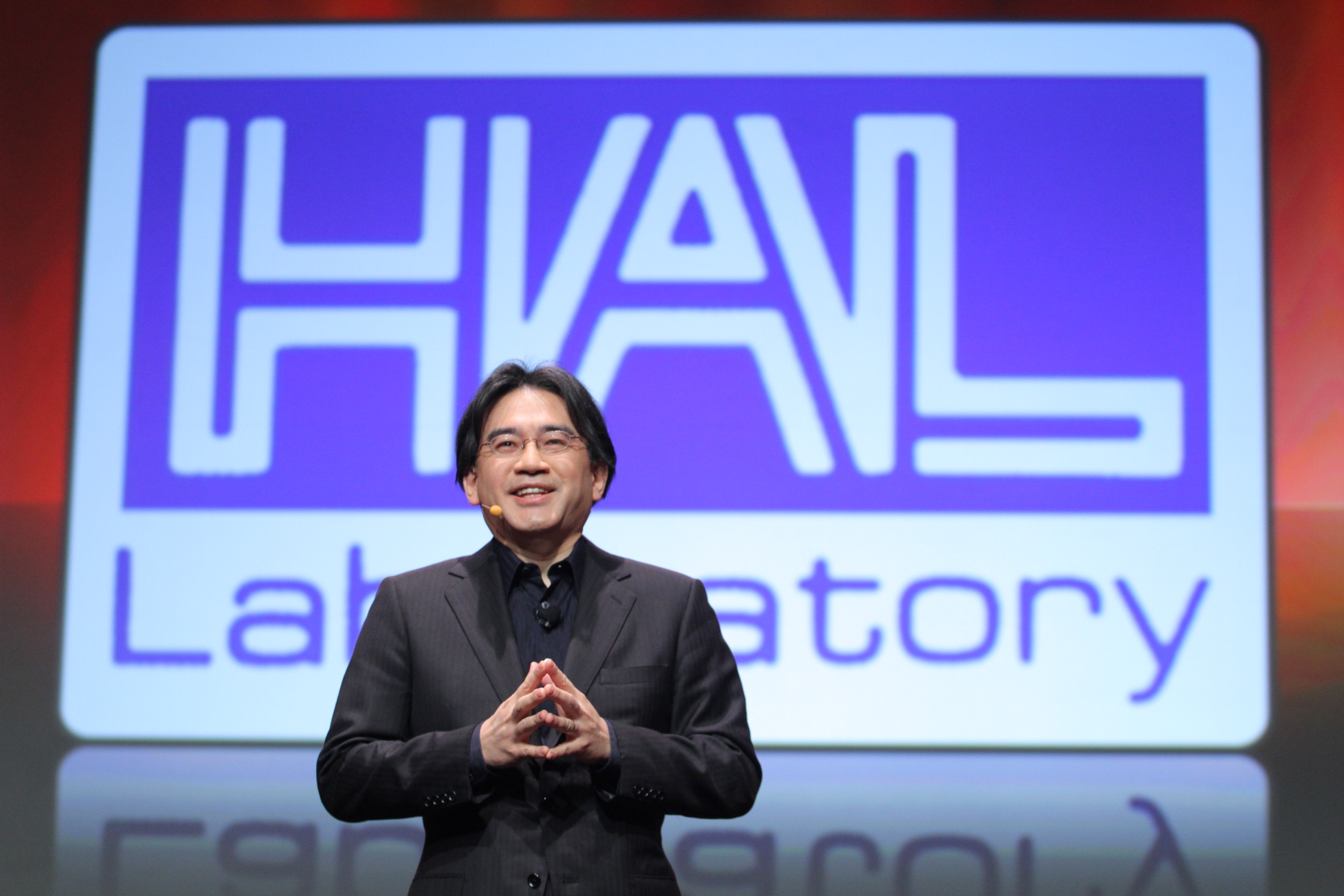
Satoru Iwata: The CEO Who Led with Heart
How a curious programmer from Sapporo became the human center of Nintendo — and what his life teaches us about leadership, craft, and meaningful work.
Introduction: Why this tribute matters
We write this tribute because Satoru Iwata’s life is a rare example of leadership that kept craft, curiosity, and people at its center. In an era when corporate language often reduces careers to metrics and CV lines, Iwata’s example reminds us that work can be humane, leadership can be sacrificial, and success can be measured by the joy you create for others.
Early life and first machines
Satoru Iwata was born in Sapporo, Hokkaido, in 1959. From childhood he showed a hands-on curiosity for electronics and programming. As a teenager he taught himself to program simple games and experiments on early personal computers and programmable calculators. He studied computer science at the Tokyo Institute of Technology, where his practical curiosity — taking machines apart to understand how they worked — became the foundation of a career built on doing, not just directing.
HAL Laboratory: from programmer to company rescuer
While still a student Iwata joined HAL Laboratory as a programmer. He became one of HAL’s core developers and later its president. At HAL he worked directly on game code and production, contributing to titles and series that would become industry staples. When HAL faced financial trouble, Iwata stepped into leadership and helped stabilize the company — an early example of his willingness to shoulder responsibility for a team and to lead by doing.
Joining Nintendo and staying close to the craft
Iwata joined Nintendo’s corporate planning division in 2000 and became Nintendo’s president in 2002. He was the first president outside the Yamauchi family line. Unlike many executives who move away from product work, Iwata remained a hands-on engineer at heart. During critical development periods he would sit with teams, open a laptop, and write or debug code himself. Those moments — a CEO at a keyboard, shoulder-to-shoulder with developers — became part of his legend and part of Nintendo’s culture under his leadership.
Programming as CEO: why he coded on weekends
Iwata’s programming while serving as Nintendo’s president was not a PR stunt. He genuinely loved the craft. When teams hit technical walls, he would join them and contribute code, tests, or debugging help. He believed that leaders who understand the product at a technical level can make better decisions and earn the trust of their teams. For Iwata, staying close to the craft preserved empathy: he could feel the pain points of engineers and designers because he had lived them.
Accounts from developers describe him working late with engineers, stepping in to solve a stubborn bug, or rewriting a small but crucial piece of code to unblock a release. Those acts were practical, morale-boosting, and emblematic of a leader who refused to be distant from the work he asked others to do.
Leadership in crisis: salary cuts and protecting people
When Nintendo faced financial pressure, Iwata made choices that prioritized people. Rather than resort to layoffs as a first response, he took public salary reductions to protect employees and preserve morale. He reduced his own compensation to help the company through difficult periods and to avoid cutting staff. That sacrifice was a concrete expression of his belief that long-term creativity and human capital matter more than short-term optics.
For teams, seeing a leader accept personal financial pain to protect colleagues is a powerful signal. It builds trust, reduces fear, and preserves the conditions necessary for creative work. Iwata’s actions in these moments are a model of servant leadership — putting the team before the executive balance sheet.
Design philosophy: joy over specs
Iwata championed a design philosophy that favored accessibility, surprise, and joy. He resisted the idea that success required winning a hardware arms race. Instead, he pushed for products that invited new audiences into play. The Nintendo DS and Wii are emblematic of that approach: they were not the most powerful machines on the market, but they were designed to create new kinds of experiences and to make play approachable for people who had never considered themselves gamers.
His famous line — that on his business card he was a corporate president, in his mind a game developer, and in his heart a gamer — captures the alignment he sought between role, craft, and identity. That alignment shaped Nintendo’s strategy and gave the company permission to pursue creative risks that prioritized human experience.
Public voice and humility
Iwata’s public communications were notable for their humility and clarity. He spoke plainly about mistakes, acknowledged when Nintendo had misread the market, and explained decisions in a way that respected players and developers alike. He apologized when necessary and celebrated the work of teams rather than taking credit. That tone — honest, human, and accountable — reinforced the culture he wanted inside Nintendo and the trust he built with the public.
Final years and legacy
Iwata continued to lead Nintendo through strategic shifts until his illness and passing in 2015. The outpouring of grief from developers, players, and colleagues around the world showed how deeply his humanity had resonated. Memorials, tributes, and personal stories highlighted not only his professional achievements but the way he made people feel: respected, trusted, and inspired to create.
His legacy is not only consoles and games but a model of leadership that centers empathy, curiosity, and craft. For anyone building a career or leading a team, his life offers a blueprint: stay curious, stay close to the work, protect your people, and measure success by the joy you create.
Timeline — key milestones
- 1959 — Born in Sapporo, Hokkaido, Japan.
- 1970s — Early interest in programming and electronics; builds simple games and experiments on early personal computers and calculators.
- 1980s — Joins HAL Laboratory as a programmer; contributes to early titles and grows into leadership roles.
- 1990s — Helps stabilize HAL during financial difficulties; gains reputation as a problem solver and leader.
- 2000 — Joins Nintendo’s corporate planning division.
- 2002 — Becomes Nintendo’s president; first president outside the founding family line.
- 2000s–2010s — Leads Nintendo through the DS and Wii eras, champions accessibility and new audiences.
- 2014–2015 — Continues to lead while battling illness; passes away in 2015. His legacy endures in Nintendo’s culture and in the many developers and players he inspired.
Lessons for careers and leadership
- Stay curious: keep learning by doing; curiosity is a career engine.
- Lead with empathy: protect and invest in people; leadership is stewardship.
- Stay close to the craft: understanding the work preserves humility and better decisions.
- Choose purpose over ego: authenticity compounds into trust and long-term value.
- Measure success by joy: build products and careers that create meaning, not just metrics.
How we used this image and license (legal note)
This post uses an image from Wikimedia Commons. The image file page and license are linked in the caption above. We have saved a copy of the Commons file page (including the license and attribution text) in our editorial records as evidence of permission under the Creative Commons Attribution 2.0 license. If you need the exact file page for legal review, use the link in the image caption (COMMONS_FILE_PAGE).