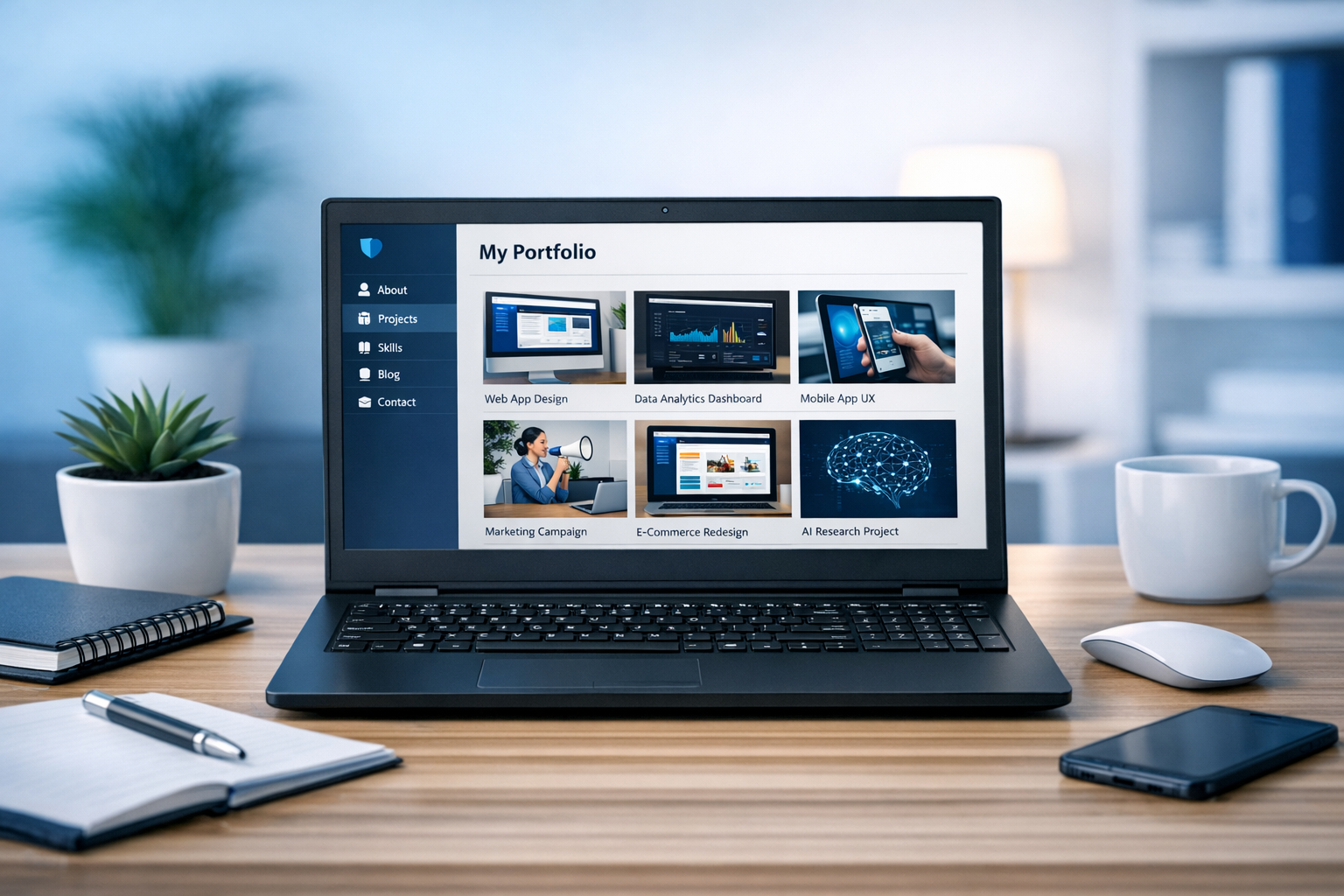
How to Build a Professional Portfolio in 2026 (Complete Guide)
In 2026, a professional portfolio is no longer optional — it’s one of the most powerful tools you can use to stand out in a competitive job market. Whether you’re a designer, engineer, marketer, analyst, or recent graduate, a strong portfolio helps recruiters understand your skills, your thinking, and the real impact of your work.
Why Portfolios Matter More Than Ever in 2026
Recruiters now expect candidates to show proof of work. With AI-driven hiring and increased competition, portfolios help you:
- Demonstrate real-world skills
- Show your problem-solving process
- Highlight measurable results
- Stand out from applicants with similar resumes
- Build a personal brand that feels human and authentic
What Recruiters Look For in a Portfolio
Across industries, recruiters consistently look for:
- Clarity: Clean layout, easy navigation, simple structure.
- Relevance: Projects aligned with the role you want.
- Impact: Metrics, outcomes, and real results.
- Process: How you think, not just what you built.
- Consistency: A cohesive personal brand.
How to Structure Your Portfolio in 2026
1. Hero Section
Your introduction should include:
- Your name and role
- A short value statement
- A clean, professional photo (optional)
2. Featured Projects
Show 3–6 strong projects. For each project, include:
- Title
- Short description
- Tools used
- Your role
- Process breakdown
- Results with metrics
3. Skills Section
Highlight your technical and soft skills, prioritizing the ones relevant to your target role.
4. About Me
Keep it human. Share your story, your values, and what drives your work.
5. Contact Section
Make it easy for recruiters to reach you with a simple form or email link.
What Projects Should You Include?
Choose projects that demonstrate:
- Real-world impact
- Problem-solving
- Technical depth
- Creativity and ownership
If you’re early in your career, include:
- Class projects
- Personal projects
- Hackathon work
- Volunteer or freelance work
How to Use Analytics to Improve Your Portfolio
In 2026, analytics are essential. They help you understand:
- Which projects get the most views
- Where visitors drop off
- Which skills attract the most attention
- What recruiters engage with
With BrightPath’s Portfolio Analytics, you can track:
- Visitor behavior
- Project performance
- Engagement patterns
- Conversion insights
This allows you to refine your portfolio continuously and increase your chances of getting interviews.
Common Portfolio Mistakes to Avoid
- Including too many projects
- Using cluttered or complex layouts
- Not showing your process
- Writing long, unfocused descriptions
- Not updating your portfolio regularly
Final Tips for a Strong Portfolio in 2026
- Keep it simple and clean
- Focus on quality over quantity
- Show your thinking, not just the final result
- Use metrics whenever possible
- Update your portfolio every 3–6 months
Build Your Portfolio Faster With BrightPath
BrightPath’s Portfolio Builder helps you create a professional, analytics-powered portfolio in minutes. Track your performance, understand recruiter behavior, and continuously improve your visibility.
Your work deserves to be seen — and your portfolio is where it begins.