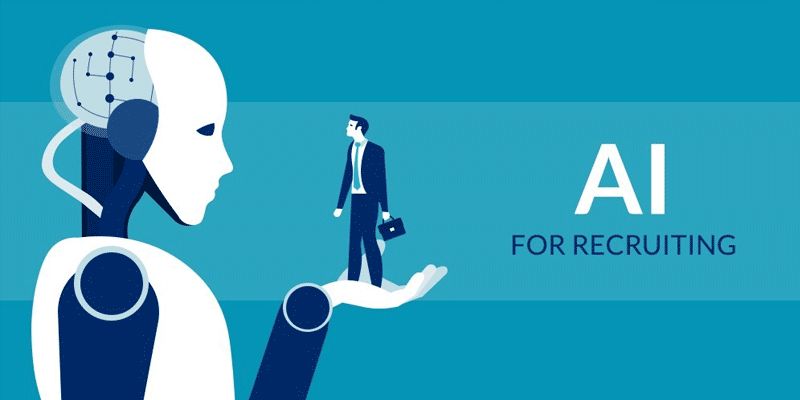
The Broken Career Ladder: How AI Is Reshaping Recruiting, Entry-Level Jobs, and Your Job Search Strategy
Author: BrightPath Team
Reading time: ~15–20 minutes
Welcome to the new reality of job hunting
Something big is happening in the job market, and if you’ve been job hunting or recruiting in 2025–2026, you can feel it even before you see the data. Fewer callbacks. Longer hiring cycles. Entry-level roles that mysteriously “require” 3–5 years of experience. And a constant, low-level anxiety that maybe—just maybe—AI is quietly rewriting the rules.
The latest research and payroll data coming out of leading institutions like Stanford and other labor economics groups confirm what many candidates and recruiters have been sensing: AI is hitting the bottom rung of the career ladder first. Entry-level hiring is shrinking in many AI-exposed roles, while demand for experienced, judgment-heavy talent remains strong or even grows.
This blog is your deep, practical guide to what’s changing, why it matters, and how to adapt—whether you’re a job seeker trying to break in, or a recruiter / talent leader trying to build a sustainable pipeline of future mid-level and senior talent.
The big shift: AI is collapsing the entry-level rung
Let’s start with the core pattern that keeps showing up in recent data and analysis: AI doesn’t just “change jobs”—it changes which jobs exist at all.
Across multiple industries, especially those with repeatable, high-volume tasks, we’re seeing:
- Fewer entry-level openings in roles that are heavily exposed to automation.
- Stable or rising demand for mid-level and senior roles that require judgment, architecture, and strategy.
- Growing reliance on AI tools to handle the “grunt work” that used to justify hiring juniors.
Think about classic entry-level work:
- Junior software engineers doing bug fixes, documentation, and simple features.
- Customer support reps handling tier-1 tickets and FAQs.
- Marketing assistants drafting social posts, basic copy, and reports.
- Data analysts cleaning data, building simple dashboards, and running routine queries.
These are exactly the kinds of tasks that modern AI systems can now handle or accelerate dramatically. When that happens, companies start asking a dangerous question: “Do we really need as many entry-level people?”
The result is a subtle but powerful shift: AI removes the volume of repetitive work that justified hiring large numbers of juniors. The work that remains is more complex, more judgment-heavy, and more strategic—which naturally skews toward mid-level and senior talent.
Why juniors feel the impact first
To understand why this hurts entry-level candidates more than experienced professionals, we need to look at how companies structure work.
Traditionally, the career ladder looks something like this:
- Entry-level: High-volume, repeatable tasks. Learn the basics. Support the team.
- Mid-level: Own projects. Make decisions. Mentor juniors.
- Senior / Lead: Set direction. Architect systems. Handle exceptions and complex problems.
AI is extremely good at the first category: high-volume, repeatable tasks. It can draft emails, summarize documents, generate code snippets, respond to FAQs, and analyze patterns at scale.
But AI is still weak at:
- Contextual judgment in messy, ambiguous situations.
- Long-term strategy and tradeoffs across multiple stakeholders.
- Deep relationship work with clients, teams, and partners.
- Ethical and legal nuance in complex environments.
So what happens? The bottom rung—the entry-level tasks—gets automated or heavily augmented. The top rungs—strategy, architecture, leadership—become even more important.
That’s why many job seekers feel like: “No one wants to hire juniors, but everyone wants ‘unicorn’ mid-levels.” And many recruiters feel like: “I can’t find enough experienced talent, but I have a flood of applicants with no experience.”
The broken career ladder problem
Here’s the paradox that labor economists and talent leaders are starting to worry about: If we eliminate or shrink entry-level roles, where do future mid-level and senior professionals come from?
You can’t magically conjure a 5-year-experienced engineer, marketer, or analyst out of thin air. They have to start somewhere.
When companies aggressively cut junior roles because “AI can handle it,” they create a delayed crisis:
- Short-term: Cost savings, faster output, fewer headcount approvals.
- Medium-term (3–5 years): A shortage of experienced talent, especially in specialized domains.
- Long-term: A fragile talent pipeline that depends on poaching from competitors instead of growing in-house.
This is what we mean by a broken career ladder: the bottom rungs are missing or unstable, making it harder for people to climb—and harder for companies to build sustainable teams.
For job seekers, this feels like:
- “Every job wants experience I don’t have.”
- “I’m stuck in a loop: I need experience to get a job, but I need a job to get experience.”
- “I’m competing against AI and against people who already have years of experience.”
For recruiters and hiring managers, it feels like:
- “We have too many applicants, but not enough who are truly job-ready.”
- “Leadership wants fewer junior hires, but expects a strong mid-level pipeline in a few years.”
- “We’re relying on lateral hires instead of building our own talent bench.”
How AI is changing recruiting itself
It’s not just the jobs that are changing—the recruiting process is being rebuilt around AI too.
Modern recruiting stacks increasingly include:
- AI-powered sourcing tools that scan profiles, portfolios, and social signals.
- ATS systems with AI ranking that score résumés against job descriptions.
- Chatbots and automated screeners that handle initial candidate interactions.
- Assessment platforms that use simulations, coding challenges, or scenario-based tests.
This has two major consequences:
- Volume is no longer the bottleneck. Recruiters can process far more applicants than before, which means: more competition for each role, and more reliance on signals that stand out.
- Signals matter more than stories. AI systems don’t “feel” your potential—they score your inputs: keywords, structure, portfolio links, skills, and measurable outcomes.
If your résumé is vague, generic, or misaligned with the role, AI-powered ATS systems will quietly push you down the list—even if you’re capable of doing the job.
That’s why modern job hunting requires a different mindset: you’re not just convincing a human recruiter; you’re also passing through an AI filter that’s looking for specific patterns.
What this means for job seekers in 2026
Let’s get practical. If you’re job hunting right now—especially for entry-level or early-career roles—what should you do differently?
1. Stop relying on “apply and pray”
The old strategy of mass-applying to dozens or hundreds of roles with a generic résumé is increasingly ineffective. AI-powered ATS systems make it easy for companies to filter aggressively.
Instead, you need a targeted, signal-rich strategy:
- Choose fewer, better-aligned roles instead of spraying applications everywhere.
- Customize your résumé to each role, mirroring the language of the job description.
- Highlight measurable outcomes (projects, results, metrics) instead of just responsibilities.
- Use AI tools to refine your résumé, but don’t let them make it generic.
2. Build a public body of work
In a world where entry-level jobs are scarce, your portfolio becomes your new “experience.”
Depending on your field, this might look like:
- GitHub repos with real projects, not just tutorials.
- Case studies of marketing campaigns, analytics projects, or design work.
- Writing samples on a blog, LinkedIn, or personal site.
- Data dashboards or notebooks showing your analysis process.
The goal is simple: when a recruiter or hiring manager looks you up, they should see evidence of capability, not just a list of aspirations.
3. Learn to work with AI, not against it
AI literacy is no longer a “nice to have”—it’s a baseline expectation. But there’s a difference between casually using AI and strategically integrating it into your workflow.
You want to be able to say, credibly:
- “I use AI to accelerate my work, but I still own the judgment and quality.”
- “Here’s a project where AI helped me, and here’s what I did that AI couldn’t.”
- “I understand the limitations and risks of AI in my domain.”
That kind of narrative positions you as AI-native talent—someone who can thrive in the new environment instead of being displaced by it.
4. Embrace project-based experience
If traditional entry-level roles are harder to land, you can’t wait passively for a company to give you “permission” to gain experience.
Instead, look for:
- Freelance gigs on platforms or through your network.
- Collaborative projects with peers (hackathons, open-source, community initiatives).
- Internships and apprenticeships that emphasize learning and mentorship.
- Self-initiated projects that solve real problems for real people.
The key is that these experiences produce artifacts—code, designs, reports, campaigns—that you can show to future employers.
What this means for recruiters and talent leaders
If you’re on the recruiting or HR side, the AI shift is both an opportunity and a risk.
1. Rebuild entry-level pathways instead of eliminating them
It’s tempting to cut junior roles when AI can handle much of the repetitive work. But that’s a short-term optimization with long-term consequences.
Instead, consider:
- Apprenticeship-style programs where juniors learn to work alongside AI tools.
- Rotational programs that expose early-career talent to multiple teams and domains.
- Structured mentorship where seniors are rewarded for developing future talent.
- Clear skill ladders that show how juniors can grow into mid-level roles.
The goal is to keep the career ladder intact—even if the tasks at each rung evolve.
2. Shift from “years of experience” to capability signals
In an AI-accelerated world, time alone is a weak proxy for skill. Someone who has been coasting for 5 years may be less capable than someone who has been intensely building for 2 years.
Consider weighting:
- Portfolio quality over job title prestige.
- Project outcomes over vague responsibilities.
- Learning velocity over static credentials.
- AI fluency over traditional tool familiarity.
This helps you identify high-potential talent that might otherwise be filtered out by rigid experience requirements.
3. Use AI to augment, not replace, human judgment
AI can be incredibly useful in recruiting:
- Ranking résumés against job descriptions.
- Summarizing candidate profiles.
- Drafting outreach messages.
- Analyzing pipeline metrics.
But it should not be the final arbiter of who gets hired. Human judgment is still essential for:
- Evaluating nuance in candidate stories.
- Understanding cultural and team fit.
- Assessing ethical awareness and long-term potential.
- Balancing diversity, equity, and inclusion goals.
The best recruiting teams treat AI as a powerful assistant—not a replacement for thoughtful, human-centered hiring.
4. Communicate transparently with candidates
Candidates today are not just looking for a job; they’re looking for clarity
Transparent communication builds trust and helps candidates self-select more effectively.
It also positions your company as forward-thinking and human-centered in an AI-heavy world.
Practical playbook: how to adapt your strategy
Let’s bring this together into concrete actions for both sides of the table.
For job seekers
- Audit your current signals. Look at your résumé, LinkedIn, and portfolio. Do they clearly show what you can do, or just what you’ve done?
- Align with AI-era roles. Target roles where human judgment, creativity, and relationship skills are central—and AI is a tool, not a threat.
- Invest in AI fluency. Learn how to use AI tools in your domain and be ready to talk about it in interviews.
- Build projects that matter. Create work that solves real problems, not just tutorial exercises.
- Network with intent. Connect with people in your target field, share your work, and ask for feedback—not just referrals.
For recruiters and talent leaders
- Review your entry-level strategy. Are you cutting junior roles without a plan for future talent?
- Update job descriptions. Remove unrealistic experience requirements and focus on skills, outcomes, and potential.
- Integrate AI responsibly. Use AI to handle volume, but keep humans in charge of final decisions.
- Design learning pathways. Make it clear how early-career hires can grow into mid-level roles.
- Measure long-term pipeline health. Track not just time-to-fill, but how your talent matures over 3–5 years.
Where BrightPath fits into this new landscape
At BrightPath, we believe the future of careers requires more than just better job boards or smarter ATS systems. It requires a Career OS—a unified, emotionally intelligent platform that helps people navigate a world where AI is changing the rules faster than traditional systems can keep up.
That means:
- Helping job seekers understand how to position themselves in an AI-driven market.
- Helping recruiters design hiring flows that are fair, future-proof, and human-centered.
- Bridging the gap between potential and opportunity with better signals, better stories, and better tools.
The broken career ladder is not inevitable. We can rebuild it—stronger, more flexible, and more inclusive—if we’re willing to rethink how we define experience, how we design entry-level roles, and how we use AI as a partner instead of a blunt instrument.
Final thoughts: your path in an AI-shaped world
If you’re feeling frustrated, anxious, or exhausted by the current job market, you’re not alone. The signals you’re picking up—fewer entry-level roles, more competition, more automation—are real.
But here’s the deeper truth: AI is not just closing doors; it’s opening new ones.
New roles are emerging around:
- AI workflow design and orchestration.
- Human-in-the-loop quality control.
- Ethical and responsible AI use.
- Hybrid roles that blend technical and human skills.
The people who will thrive in this world are not those who ignore AI or fear it—but those who learn to work with it, shape it, and build on top of it.
Whether you’re a job seeker or a recruiter, your path forward starts with one question: “How can I design my strategy for a world where AI is part of the system, not an external threat?”
At BrightPath, we’re committed to helping you answer that question—not just with tools, but with clarity, empathy, and a realistic view of what’s coming next.
The career ladder is changing. Let’s rebuild it—together.