The Resume That Actually Gets You Hired in 2026: A Human‑Centered Blueprint the Big Resume Sites Don’t Want You to Know
Every year, millions of job seekers open Google and type the same desperate phrase:
“How do I write a resume that actually gets me hired?”
And every year, the internet gives them the same recycled advice:
– Use this template
– Add these keywords
– Follow this format
– Copy this example
It’s the same content repackaged across resume.co, career.io, Zety, ResumeGenius, and dozens of others.
It’s clean. It’s structured. It’s SEO‑optimized.
But it’s missing the one thing that actually gets someone hired:
Identity.
1. The Resume Problem No One Talks About
Most resumes fail long before they reach a hiring manager.
Not because of formatting.
Not because of ATS.
Not because of missing keywords.
They fail because:
They erase the human behind the experience.
Templates flatten people.
ATS myths scare people.
Generic advice dilutes people.
The result?
A resume that looks clean…
but says nothing.
Here’s the truth the big resume sites won’t tell you:
ATS doesn’t reject resumes — unclear humans do.
Hiring managers don’t hire templates.
They hire clarity.
They hire identity.
They hire people who know who they are and what they bring.
2. What Hiring Managers Actually Look For in 2026
The hiring landscape has changed dramatically.
AI screening, skill‑based hiring, portfolio‑driven evaluation — all of it has reshaped what matters.
But one thing hasn’t changed:
Hiring managers still hire humans.
In 2026, the top signals hiring managers look for are:
- Clarity of intent — Do you know what you want?
- Direction — Does your resume show a coherent path?
- Evidence — Can you prove your impact?
- Narrative — Does your experience make sense?
- Transferable value — Can you apply your skills to this role?
- Impact — Did you change anything?
- Trust signals — Are you reliable, consistent, and credible?
- Your voice — Does your resume sound like a human or a template?
These eight elements form the foundation of the BrightPath approach — a human‑centered resume that communicates identity, not just information.
3. The I.D.E.N.T.I.T.Y. Resume Blueprint (BrightPath’s Proprietary Framework)
To help job seekers break free from generic templates, BrightPath developed a simple but powerful model:
I.D.E.N.T.I.T.Y. Resume Blueprint
- I — Intent: What role are you aiming for?
- D — Direction: Does your experience point toward that role?
- E — Evidence: What measurable impact have you made?
- N — Narrative: Does your story make sense?
- T — Transferable Value: What skills carry over?
- I — Impact: What changed because of you?
- T — Trust Signals: Certifications, consistency, credibility.
- Y — Your Voice: The human tone that makes you memorable.
This framework is the antidote to template-driven resumes. It restores the human being behind the bullet points.
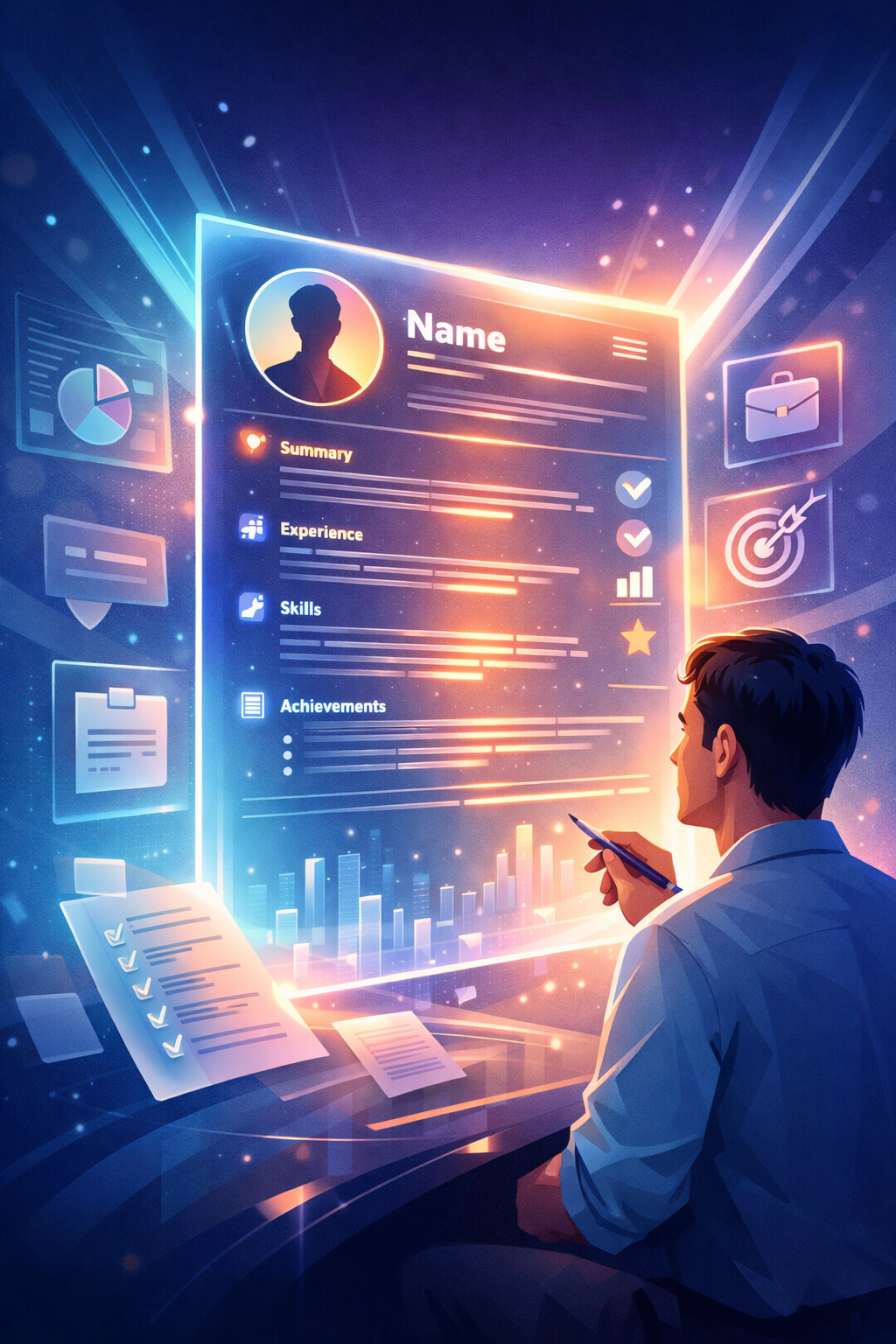
4. The 2026 Resume Structure That Beats ATS + Humans
Forget the outdated “Objective Statement.”
Forget the overstuffed “Skills Section.”
Forget the robotic bullet points.
Here is the modern structure that works in 2026:
1. Identity Header (6-second clarity)
Your name, your role, your direction — instantly clear.
2. Narrative Summary (Your story in 4–6 lines)
Not a list of skills. Not a generic paragraph. A human introduction.
3. Experience (Impact-driven, not task-driven)
Each bullet answers:
“What changed because of me?”
4. Skills (Aligned to intent)
Not a grocery list — a curated set.
5. Trust Signals
Certifications, awards, publications, portfolio links.
6. Modern Formatting Rules
- Clean, simple layout
- Readable fonts
- ATS-safe structure
- No tables, text boxes, or images
- Consistent spacing
5. Real Before/After Examples (Identity Transformation)
Here’s where BrightPath outshines every competitor: We don’t just rewrite resumes — we transform identity.
Before:
“Managed customer service tasks and resolved issues.”
After:
“Improved customer satisfaction from 82% to 94% by redesigning the support workflow and resolving 40+ cases daily with a 98% resolution rate.”
One is a task. The other is a story of impact.
6. The Emotional Side of Resume Writing
Most people don’t struggle with resumes because they lack experience. They struggle because they lack clarity.
Resume writing forces you to confront:
- Who you are
- What you’ve done
- What you want
- What you’re afraid to claim
This is why people freeze. This is why people procrastinate. This is why templates feel safe — they hide you.
But hiding is the opposite of getting hired.
A resume is not a document.
It is a declaration:
“This is who I am. This is what I bring. This is where I’m going.”
7. The 2026 Resume Identity Checklist (Downloadable)
Use this checklist before sending any resume:
- Does my resume show who I am?
- Is my direction clear?
- Do my bullets show impact?
- Is my narrative coherent?
- Are my skills aligned to the role?
- Are my trust signals visible?
- Does my voice sound human?
- Would I hire me based on this?
8. Final Thoughts: The Resume That Gets You Hired in 2026
The resume that gets you hired in 2026 is not the prettiest.
Not the most optimized.
Not the most keyword-stuffed.
It’s the one that feels the most human.
Because hiring is not a transaction. It’s a relationship.
And relationships begin with identity.
Write a resume that sounds like you — not like the internet.
That’s how you get hired. That’s how you stand out. That’s how you build a career with clarity and direction.